Delta Birds: Pacheco Marsh
Great Egret in flight over the marshland in the afternoon sun
Delta Birds: Pacheco Marsh
Great Egret in flight over the marshland in the afternoon sun

I have been passionate about photography ever since my high school days in Hillsboro, Oregon. Back then, it was all about sports and news events. These days, I love photographing birds in their environment. It's my passion in life.
%20copy.jpg/:/cr=t:9.84%25,l:51.61%25,w:37.59%25,h:52.63%25/rs=w:365,h:365,cg:true,m)
Wildlife photography has helped me reconnect with nature. It has also made me appreciate life and all the beauty it has to offer.
Photo: Osprey on the Carquinez Strait

To tell the story of birds in their natural habitat through my lens, and to help educate people on the importance of birds in our environment.
Photo: Brewer's Blackbird on the Carquinez
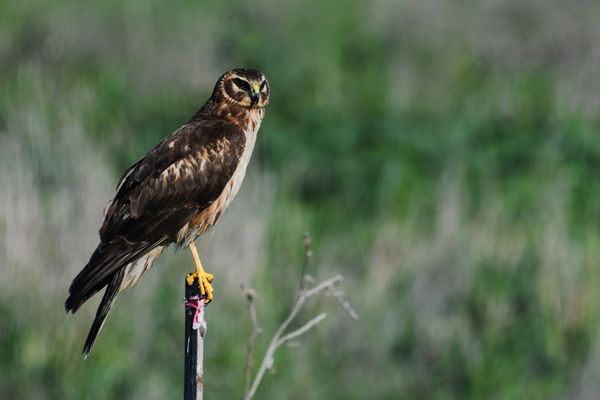
The Red-tailed Hawk (Buteo jamaicensis) is the most widespread and familiar large hawk in North America, known for its iconic brick-red tail and broad, rounded wings. Often seen perched on roadside poles or soaring in wide circles over open fields, it is a versatile predator that has adapted well to both wild and urban environments.
Key Characteristics
Behavior and Life Cycle
Habitat and Range: Red-tailed hawks are found across North America, from central Alaska and Canada south to Panama and the West Indies. They prefer open country interspersed with patches of trees for nesting and perching. While some populations are permanent residents, those in the northernmost ranges migrate south for the winter.
Conservation and Cultural Significance

Red-tailed Hawk taking a morning dip in a fresh water puddle in the lush green grass at Radke Park

Male Red-tailed Hawk on Waterbird Way

Female Red-tailed Hawk in flight at Radke Park

Pacheco Marsh is the latest restoration and public access project from the John Muir Land Trust. It is a great place for a nice, peaceful walk along the marshlands of the Carquinez Strait. There are a variety of birds, including egrets, hawks, ducks, marsh wrens, finches, sparrows and White-tailed Kites.
Photo: Marsh Wren foraging for food

I love my morning photo walks at Radke Martinez Regional Shoreline Park. Located just off the Carquinez Strait in Martinez, it is a hidden gem in the vast system of waterways in the California Delta. It is also a great place for birding, with a variety of birds year-round, including egrets, herons, ducks, sparrows, wrens, turkey vultures and osprey.
Photo: Greater White-fronted Geese on the damp grass

Part of the John Muir Land Trust, Mt. Wanda is a great place to explore nature and a cool place for birding. If you love Acorn Woodpeckers, this is definitely the place for you. They can be seen frequently, either in flight or hoarding acorns on one of the granary trees in the area. Their unique “waka-waka” calls can be heard quite often along the trail systems of Mt. Wanda.
Photo: Acorn Woodpecker on a granary tree
Your contribution will enable Tim to travel the delta and photograph birds in their natural habitat. It will also help with providing education to the public as well as conservation efforts for our avian friends. We are very grateful for your generosity.
Powered by